Africa is undergoing a massive transformation — not only in ambition but in physical form. Across the continent, countries are investing billions into infrastructure megaprojects that promise to redefine economies, create jobs, and drive sustainable growth.
From energy and transportation to smart cities and industrial might, here are five of the biggest construction projects in Africa, each carrying multibillion-dollar budgets and the hopes of millions.
1. The Grand Ethiopian Renaissance Dam (GERD)
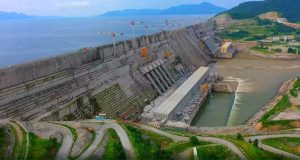
– Ethiopia
🏗 Budget: Estimated $5 billion
📍 Location: Benishangul-Gumuz Region, near the Sudanese border
⚡ Capacity: 6,450 MW (making it Africa’s largest hydropower plant)
🕒 Construction Timeline: Began in 2011, now over 90% complete
The Grand Ethiopian Renaissance Dam is Ethiopia’s flagship infrastructure project and the largest hydropower plant in Africa. Positioned strategically on the Blue Nile, GERD is expected to triple Ethiopia’s electricity generation capacity, providing power to millions domestically and for export to neighboring countries including Sudan, Kenya, and Djibouti.
While it has drawn geopolitical tensions with Egypt and Sudan due to water resource concerns, the project remains a symbol of national pride and regional self-reliance. It is set to revolutionize East Africa’s energy landscape.
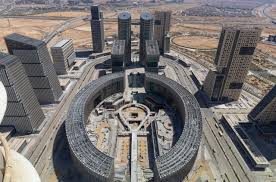
2. The New Administrative Capital – Egypt
🏗 Budget: Estimated $59 billion
📍 Location: 45 km east of Cairo
🏙 Area: 700 sq km (larger than Singapore)
🕒 Phases: Phase 1 complete; full city rollout continues through 2030
To combat Cairo’s overpopulation and congestion, Egypt is building a new capital city in the desert. Dubbed the New Administrative Capital (NAC), the project includes a Presidential Palace, Parliament, Ministries, foreign embassies, a massive airport, business districts, and Africa’s tallest skyscraper — the 385-meter Iconic Tower.
Funded through public-private partnerships and foreign investment (notably from China), the NAC is also designed as a “smart city,” with digital infrastructure, renewable energy, and autonomous transport systems. Once complete, it is expected to house 6–7 million people.
3. Konza Technopolis – Kenya
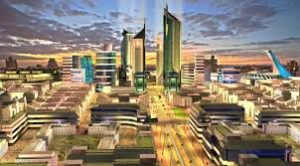
🏗 Budget: Estimated $14.5 billion
📍 Location: 60 km southeast of Nairobi, Machakos County
🧠 Purpose: Smart city for innovation, technology, education
🕒 Completion Timeline: Full development through 2030 (Phase 1 completed)
Often referred to as “Africa’s Silicon Savannah,” Konza Technopolis is Kenya’s answer to global tech hubs like Shenzhen and Bangalore. Spread across 5,000 acres, it’s designed to attract technology firms, universities, data centers, research institutes, and global corporations.
Supported by the Kenyan government and key international partners, Konza is expected to create over 100,000 direct jobs and generate billions in GDP growth annually. It’s a cornerstone of Kenya’s Vision 2030 economic plan.
4. Lagos-Calabar Coastal Railway – Nigeria
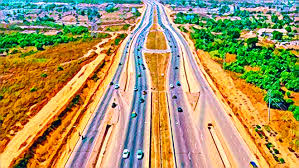
🏗 Budget: Estimated $11.17 billion
📍 Route: Lagos – Calabar (1,402 km), passing through 10 coastal states
🚄 Project Lead: China Civil Engineering Construction Corporation (CCECC)
🕒 Project Timeline: Construction expected through 2029
The Lagos-Calabar Coastal Railway is a transformative transport megaproject intended to improve connectivity along Nigeria’s coastline. The double-track standard gauge railway will run through major cities like Port Harcourt, Uyo, and Calabar, boosting trade, tourism, and mobility.
Backed largely by Chinese infrastructure loans and Nigerian government funding, the project is expected to transport up to 16 million passengers annually and unlock new economic corridors along the southern belt.
5. Dangote Refinery – Nigeria
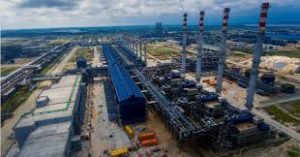
🏗 Budget: Estimated $19 billion
📍 Location: Lekki Free Trade Zone, Lagos
🛢 Capacity: 650,000 barrels per day
🕒 Construction: Began in 2016; operational by 2025
Owned by Africa’s richest man, Aliko Dangote, this refinery is poised to be the largest single-train oil refinery in the world. Once fully operational, it is expected to supply all of Nigeria’s fuel needs, ending decades of dependency on imported petroleum products.
The refinery also includes a fertilizer plant, petrochemical units, and port infrastructure. The impact? Lower fuel costs, increased exports, and the creation of over 100,000 jobs — making it one of the most impactful industrial investments in Africa’s history.
🧭 What These Projects Mean for Africa
Each of these megaprojects serves as a strategic lever for continental growth:
💼 Job Creation: Collectively, these projects will create millions of jobs directly and indirectly.
🔋 Energy Independence: With GERD and Dangote’s refinery, African countries aim to control their energy futures.
📡 Digital Leapfrogging: Cities like Konza reflect Africa’s leap into the digital economy.
🚉 Improved Mobility: Railways and roads unlock trade and reduce isolation.
🌍 Global Competitiveness: Africa is building the infrastructure to support global trade, investment, and innovation.
Africa is not just a land of potential — it’s a land in motion. These projects represent more than concrete and steel; they are the foundations of a new African narrative: one of progress, power, and purpose.
As cranes rise and cities take shape, one thing is clear — Africa is building its future, and it’s building big.