To run a 20-ton excavator on pure battery power for a standard 10-hour shift, you would need a battery so heavy it would significantly reduce the machine’s lifting capacity. Furthermore, “charging” an excavator for 6 hours in the middle of a remote project site is a logistical nightmare.
Construction doesn’t have time to wait for a plug. This is why the industry is looking at the Hydrogen Race.
⚡ The Two Paths to Hydrogen Power
The industry isn’t just using one type of hydrogen tech; it’s split into two fascinating engineering paths:
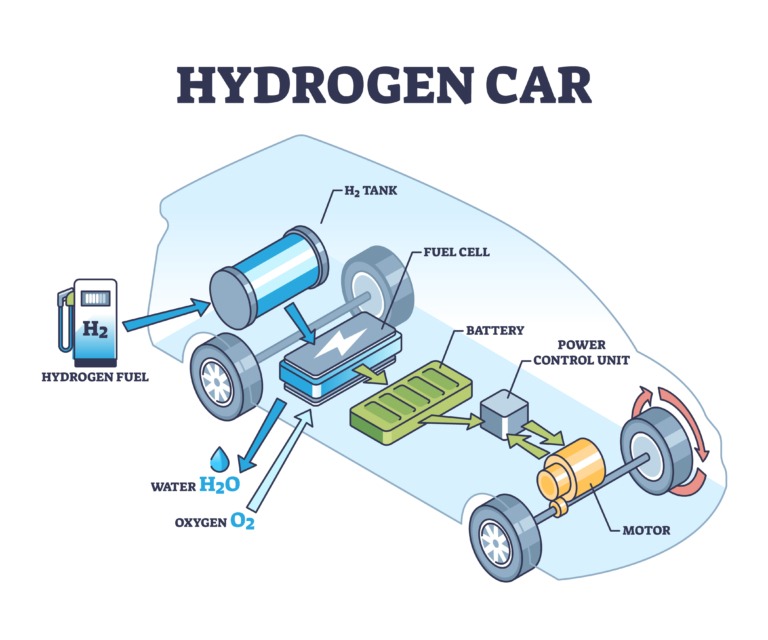
1. Hydrogen Fuel Cells (FCEV)
Think of this as an onboard chemical plant. Hydrogen is passed through a fuel cell to create electricity, which then powers electric motors.
The Advantage: Silent and incredibly efficient.
The Disadvantage: Highly sensitive to the dust and vibrations of a rocky construction site.
2. Hydrogen Combustion (The JCB “Game Changer”)
This is the breakthrough that has contractors excited. Companies like **JCB** have developed engines that look and act almost exactly like the diesel engines we know. They have pistons, cooling systems, and valves—but they burn hydrogen gas instead of diesel.
The Pro: It’s rugged. It handles the dust and heat of a quarry perfectly.
The cons: It still requires a massive leap in fueling infrastructure.
–🏆 Who is Winning the Race in 2026?
The “Hydrogen Race” has moved from the laboratory to the dealership. Here is who is leading the pack:
JCB: The undisputed leader in hydrogen combustion. Their hydrogen-powered backhoe loaders and Loadalls are already operating in real-world “beta” environments. They’ve proven that you can swap a diesel engine for a hydrogen one without losing a single kilo of breakout force.
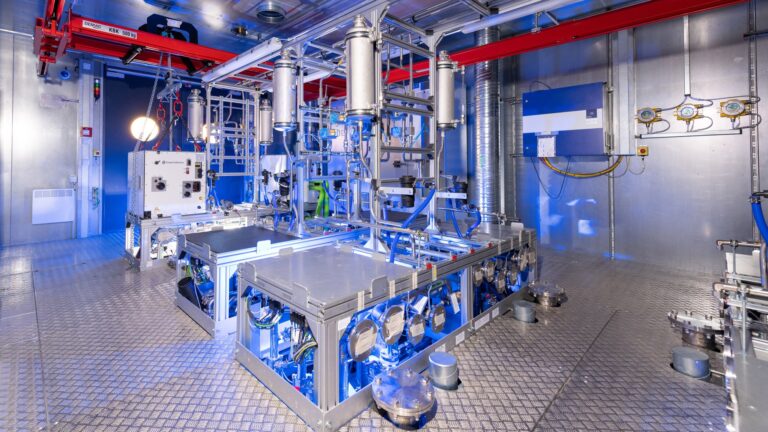
Volvo CE: Volvo has launched a dedicated hydrogen test facility and is focusing on massive articulated haulers. Their goal? To make the “site of the future” completely carbon-free by 2030.
Liebherr: They recently won innovation awards for their hydrogen-powered crawler excavators, proving that even the heaviest “big iron” can run on the most abundant element in the universe.
💰 The Business Case: Why This Matters for Your Wallet
This isn’t just about “saving the planet.” It’s about Residual Value.
As global carbon taxes increase and international project tenders begin requiring “Green Credentials,” the resale value of a traditional diesel-only fleet will eventually start to drop.
Future-Proofing: Contractors who understand hydrogen today will be the ones buying the high-value, “green-certified” fleets of tomorrow.
Operational Speed: Hydrogen can be refilled in under 10 minutes —the same as diesel. That means zero lost productivity.
🌍 What This Means for the African Market
In regions where the electrical grid can be inconsistent, hydrogen offers a unique advantage. It can be transported in tanks to remote sites just like diesel. While we are still in the early stages of “Green Hydrogen” production in Africa, the machinery being built today is designed to be the backbone of our infrastructure for the next 20 years.
The Verdict
Diesel isn’t dead yet—but it’s definitely looking over its shoulder. The “Hydrogen Race” is proving that we can build the world without destroying it, one cubic meter of earth at a time.
At HuluCart, we keep our eyes on the global horizon so you can keep your eyes on the project. Whether you are looking for a reliable diesel workhorse or scouting the “Green” tech of the future, our marketplace is built for the modern contractor.