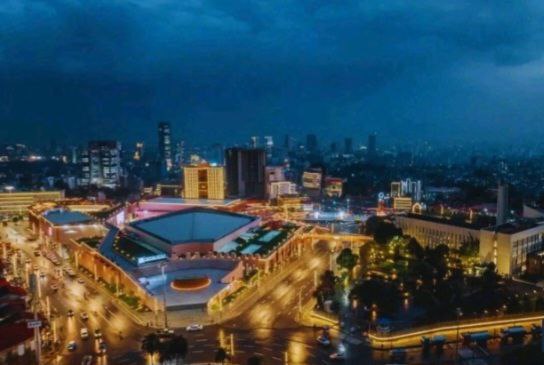
Over the last eight years, Ethiopia has undergone an economic transformation that has few parallels on the African continent. This period has been defined by an aggressive push toward industrialization, a complete overhaul of the national infrastructure, and the launch of mega-projects that are global in scale.
However, as 2026 progresses, this momentum is being tested by an unprecedented geopolitical storm. The conflict in the Middle East—specifically the tension involving the US, Israel, and Iran—has led to the closure of the Strait of Hormuz, a critical chokepoint for 20% of the world’s oil supply. For a nation in the midst of a historic building boom, this “oil shock” is more than a price hike; it is a strategic challenge that is forcing Ethiopia to accelerate its transition toward a new, self-sufficient energy model.
The foundation of Ethiopia’s economic strategy is its people. With a population exceeding 138 million—more than 70% of whom are under the age of 24—the country possesses a massive “demographic dividend.” This young, increasingly urbanized workforce is the primary driver behind the industrial parks popping up from Hawassa to Kombolcha.
To capitalize on this human capital, the government has prioritized sectors where scale and energy matter: manufacturing, agro-processing, and logistics. But these sectors are energy-intensive. Every factory requires power, and every truck transporting goods to the Port of Djibouti requires fuel. The current global shortage has highlighted a critical vulnerability: the massive financial drain caused by oil imports, which previously cost the nation billions of dollars annually.
The Blueprint for a Modern State: Mega-Projects in Focus
Ethiopia’s ambition is best visualized through its “Vision 2035” projects. These are not just local improvements; they are designed to turn the country into a continental power:
- Bishoftu International Airport: Ground broke in January 2026 on what is destined to be Africa’s largest aviation hub. Located 40km southeast of Addis Ababa, the project’s first phase alone is a $12.5 billion investment. By 2030, it will handle 60 million passengers, eventually scaling to 110 million. This project is the centerpiece of a plan to link African trade under the Continental Free Trade Area (AfCFTA).
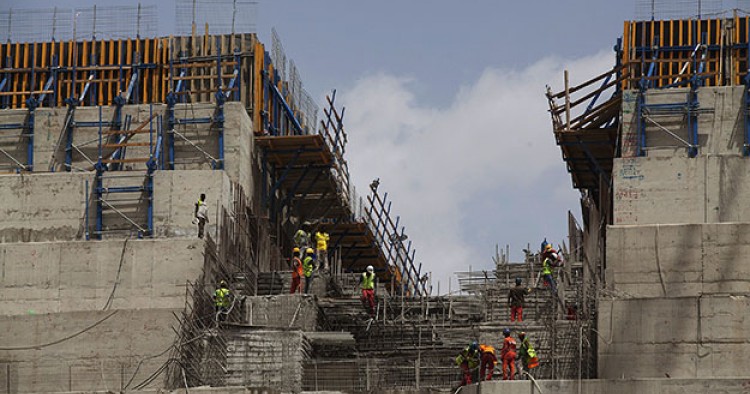
- The Koisha Hydroelectric Dam: As part of the Gibe cascade, Koisha is a pillar of Ethiopia’s renewable energy strategy. By tapping into the Omo River, it adds vital capacity to a national grid that is increasingly looking to export electricity to neighboring Kenya, Djibouti, and Sudan.
- The Dangote Fertilizer Complex: In March 2026, a $4.2 billion agreement was signed to secure natural gas for this urea complex. Once operational, it will produce 3 million tons of fertilizer annually. For an agrarian economy, this is a game-changer, moving Ethiopia from a net importer of expensive fertilizer to a regional exporter, ensuring food security for millions.
The 2026 Oil Shock: The Strait of Hormuz Crisis
The global landscape shifted dramatically in early 2026. The closure of the Strait of Hormuz on March 4th caused a near-total collapse in maritime traffic through the corridor. As global crude prices surged past $120 per barrel, Ethiopia felt the impact immediately.
By April 2026, the retail price of benzene in Ethiopia jumped to over 142 Birr per liter. For a landlocked nation, these costs are magnified by the “logistics tax”—the high price of trucking goods across long distances. This energy shock has threatened to trigger inflation in food and essential commodities, putting pressure on the very citizens the economic surge was meant to uplift.
Faced with the volatility of the global oil market, Ethiopia has taken a bold and controversial step: The total ban on the import of internal combustion engine (ICE) vehicles.
In early 2024, Ethiopia became the first nation in the world to prohibit the entry of gasoline and diesel cars, a policy that has reached a fever pitch in 2026. The logic is simple: Ethiopia has an abundance of renewable “green” electricity from its dams but zero domestic oil production. By shifting the transport sector to the grid, the country can save up to $7 billion annually in foreign exchange.
The State of EV Adoption in 2026:
- The Fleet: There are now over 140,000 electric vehicles (EVs) on Ethiopian roads, representing nearly 10% of the total registered vehicles—a rate far exceeding the global average.
- Local Assembly: The government has issued directives to convert all existing vehicle assembly lines to EV production. There are currently 17 operational plants, with a target of 60 by 2030. Companies like the Belayneh Kindie Group are already delivering hundreds of electric buses for Addis Ababa’s public transport.
- Infrastructure: To combat “range anxiety,” the Ministry of Transport is implementing a plan to install charging stations every 50 to 120 kilometers along major trade routes, such as the Addis-Djibouti corridor.
Despite the progress, the transition is not without hurdles. The EV shift is largely concentrated in Addis Ababa, where electricity access is high. In rural areas, the “infrastructure gap” remains a significant barrier. Furthermore, the global oil crisis has made the import of parts for the very mega-projects Ethiopia is building more expensive.
However, the government’s response has been one of resilience. By providing 20 billion Birr in monthly fuel subsidies to ease the transition and doubling down on renewable energy investments, Ethiopia is attempting to build a “Green Economy” that is decoupled from Middle Eastern geopolitics.
The events of 2026 have proven that economic growth cannot be built on the shifting sands of foreign oil. Ethiopia’s decision to pair mega-infrastructure projects—like the Bishoftu Airport and the Dangote Fertilizer plant—with a radical shift toward electric mobility and hydroelectric power is a blueprint for the “New Africa.”
While the closure of the Strait of Hormuz and the soaring cost of oil present a steep climb, the “Lion” is no longer walking; it is running. By turning a crisis into a catalyst for green innovation, Ethiopia is ensuring that its economic boom is not just a temporary surge, but a sustainable foundation for the 140 million people who call it home.
Keywords: Ethiopia Economy 2026, EV Adoption Ethiopia, Bishoftu International Airport construction, Strait of Hormuz oil crisis, Koisha Dam, Ethiopia fertilizer plant, Green energy transition Africa.